

Catcher interference on the rise as big league backstops squeeze in for pitch framing
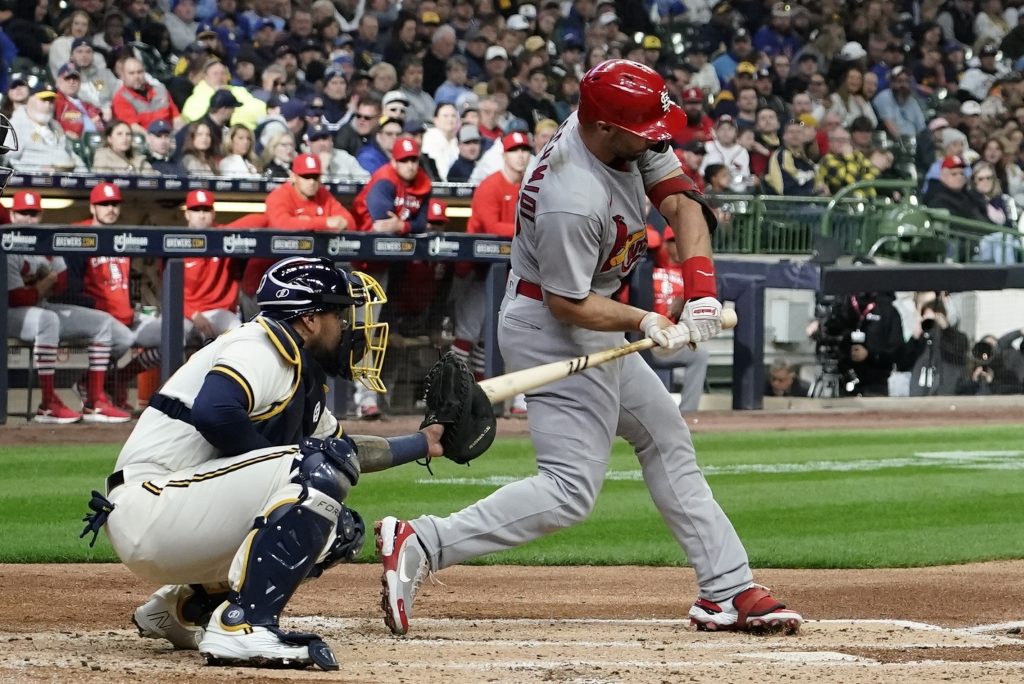
FILE - Milwaukee Brewers catcher Omar Narvaez is called for catchers interference as St. Louis Cardinals' Paul Goldschmidt hits during the third inning of a baseball game Thursday, April 14, 2022, in Milwaukee. The major leagues have seen a marked increase in catcher interference calls this season. Through Thursday's, June 29 big league games, there had been 57 catcher interference calls, up from 38 at the same point last year.
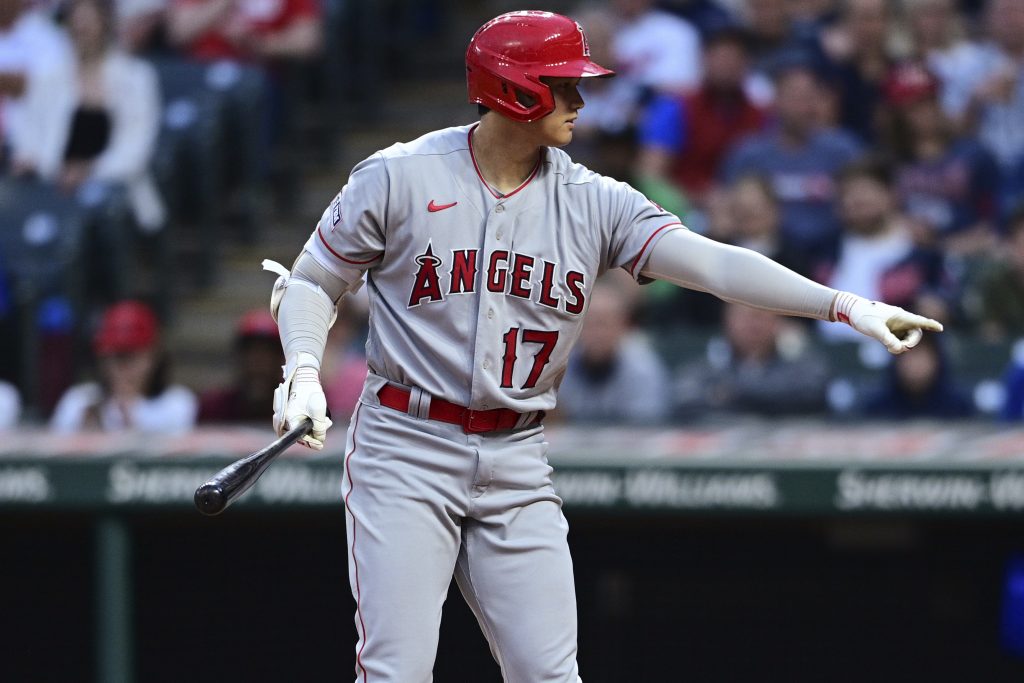
FILE - Los Angeles Angels' Shohei Ohtani calls for catcher interference against the Cleveland Guardians during the fifth inning of a baseball game Friday, May 12, 2023, in Cleveland. The major leagues have seen a marked increase in catcher interference calls this season. Through Thursday's, June 29 big league games, there had been 57 catcher interference calls, up from 38 at the same point last year.
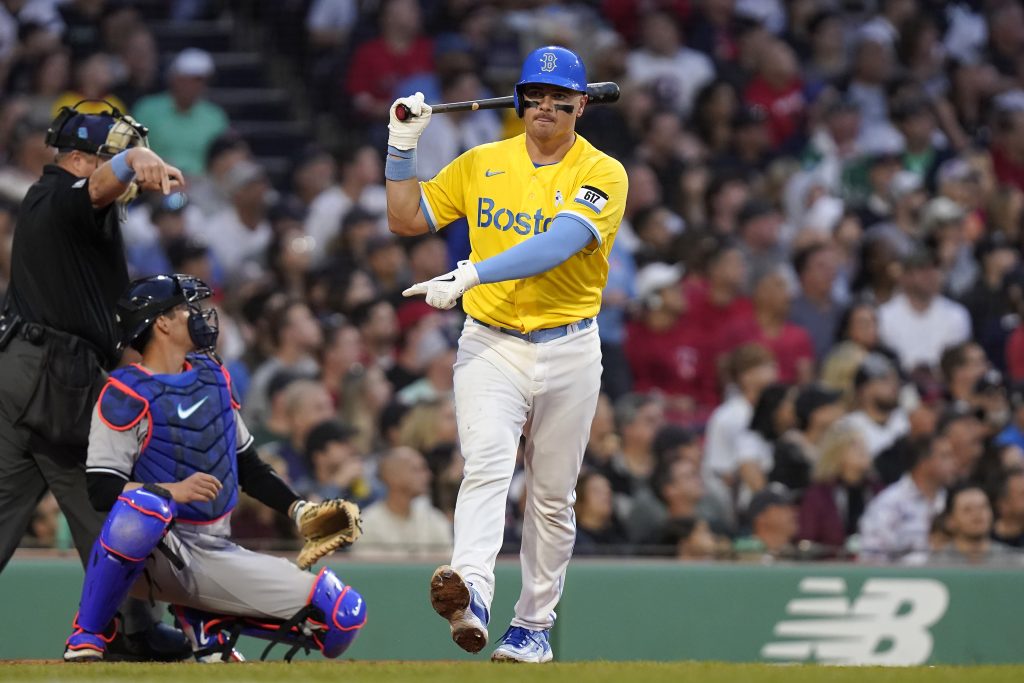
FILE - Boston Red Sox's Reese McGuire, right, gestures to first base on catcher interference in front of New York Yankees' Kyle Higashioka, second from left, allowing Red Sox's Alex Verdugo to score in the fourth inning of the second game of a baseball doubleheader, Sunday, June 18, 2023, in Boston. The major leagues have seen a marked increase in catcher interference calls this season. Through Thursday's, June 29 big league games, there had been 57 catcher interference calls, up from 38 at the same point last year.
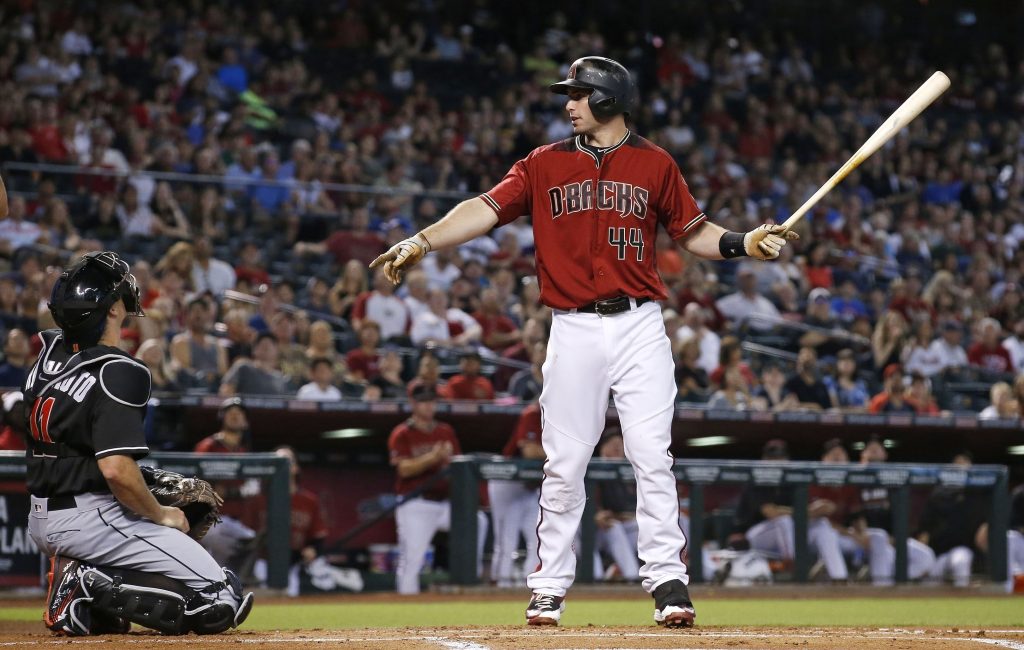
FILE -Arizona Diamondbacks' Paul Goldschmidt (44) points to Miami Marlins' J.T. Realmuto, left, for catcher interference during the first inning of a baseball game Sunday, June 12, 2016, in Phoenix. The major leagues have seen a marked increase in catcher interference calls this season. Through Thursday's, June 29 big league games, there had been 57 catcher interference calls, up from 38 at the same point last year.
Godofredo A. Vásquez - staff, AP
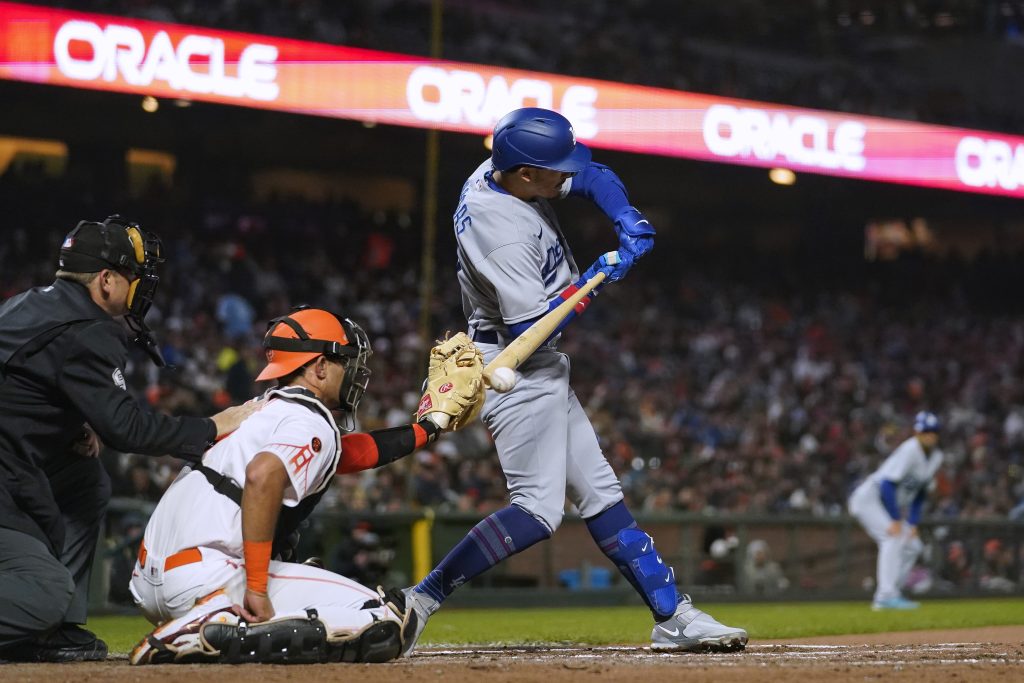
San Francisco Giants catcher Blake Sabol, left, interferes with Los Angeles Dodgers’ Miguel Vargas during an at-bat in the sixth inning of a baseball game in San Francisco, Tuesday, April 11, 2023. The major leagues have seen a marked increase in catcher interference calls this season. Through ThursdayÄ¢¹½ÊÓƵ, June 29 big league games, there had been 57 catcher interference calls, up from 38 at the same point last year.
CHICAGO (AP) — Trying to make the most of his powerful swing, White Sox slugger Luis Robert Jr. lets the ball run deep into the strike zone sometimes.
ThatÄ¢¹½ÊÓƵ when it happens.
“When I do that, the catchers, they might think that I am not swinging (for) the ball and they try to reach the ball while I am swinging,â€� Robert said through a translator. “I think thatÄ¢¹½ÊÓƵ the reason why in my case.â€�
The end result is often interference, putting Robert on first base and handing an error to the catcher. It has happened to Robert five times already this season, and he is far from alone.
Through ThursdayÄ¢¹½ÊÓƵ big league games, there have been 57 catcher interference calls, up from 38 at the same point last year. The number was 35 through June 29 in 2021 and 30 in 2019, according to Sportradar. The 2020 season started on July 23 because of the COVID-19 pandemic.
Since 1974, the highest single-season total for catcher interference calls is 74 last year, followed by 62 in 2021.
The increase has caught the attention of players and managers around the league.
“We try to pinpoint which guys that, yeah, we have to be careful with that could bring a catcherÄ¢¹½ÊÓƵ interference,â€� said Texas Rangers manager Bruce Bochy, a former big league catcher. “Some guys light it up pretty good, I’m talking about the hitters. So we have to be aware of them.â€�
Chicago Cubs manager David Ross, another former catcher, said he has pointed out a couple of close calls to Yan Gomes, one of his backstops.
“I’ll yell at him, ‘Hey, it looks pretty close,'â€� Ross said. “ItÄ¢¹½ÊÓƵ less him and more the batter. And even we slowed one down in the dugout the other day, and I mean it just barely missed his glove. So itÄ¢¹½ÊÓƵ definitely on the radar.â€�
Under MLBÄ¢¹½ÊÓƵ catcher interference rule, the batter is awarded first if any fielder interferes with him during a pitch. It happens most often when a hitter gets a piece of the catcherÄ¢¹½ÊÓƵ glove with his bat.
When catcher interference is called, the play is allowed to continue in case the outcome is more advantageous for the offensive team than the interference. If the interference call is accepted, the catcher is charged with an error. The hitter is marked down for a plate appearance but not an at-bat, and reaching first doesn’t affect the playerÄ¢¹½ÊÓƵ on-base percentage.
One of the biggest factors in the increase is pitch-framing metrics that look favorably on catchers that receive the ball closer to the plate.
PittsburghÄ¢¹½ÊÓƵ Austin Hedges, DetroitÄ¢¹½ÊÓƵ Jake Rogers and San FranciscoÄ¢¹½ÊÓƵ Blake Sabol are tied for the major league lead with four interference calls apiece. Hedges also ranks No. 1 among catchers in deserved runs prevented and catching defense added, according to Baseball Prospectus, and Rogers is among the league leaders in each category.
Robert, Los Angeles Angels star Shohei Ohtani and Oakland rookie Esteury Ruiz have drawn the most catcher interference calls, followed by Houston outfielder Kyle Tucker with four and Los Angeles Dodgers outfielder Jason Heyward at three.
“Just trying to get closer to the hitter, closer to home plate,â€� Hedges said. “Helps with receiving. ItÄ¢¹½ÊÓƵ one of the main adjustments I’ve made this year and my receiving has been significantly better than itÄ¢¹½ÊÓƵ been in a long time and thatÄ¢¹½ÊÓƵ the main reason. I’d rather not have catcherÄ¢¹½ÊÓƵ interferences, but if a few of them in a season is the price to pay for leading the league in receiving, then I’ll do it.â€�
Moving closer to the plate helps catchers with framing pitches for strikes, or what Ross describes as “presenting the ball as best you can for the umpire and getting the best calls.� Catching the ball early is especially helpful when it comes to lower pitches.
With Major League Baseball testing an Automatic Ball-Strike System in the minors, the art of framing could go away in the coming years.
“The stats, the metrics say the closer you are, the better you’ll be at receiving. … ItÄ¢¹½ÊÓƵ what I’m trying to do,â€� Hedges said. “I’m trying to find that happy ground of not being too close but being as close as I can to get to as many pitches as I can.â€�
While moving closer might help with catching metrics, some of the interference plays have been costly. The resulting baserunners from 16 of the 57 calls this season have come around to score, according to Sportradar.
The Angels’ Matt Thaiss was called for catcher interference twice in the eighth inning of a 9-7 loss at Boston on April 15, helping the Red Sox rally for the win. Robert reached on catcher interference and scored on Jake BurgerÄ¢¹½ÊÓƵ three-run double during a 5-1 victory over Kansas City on May 20. During the second game of BostonÄ¢¹½ÊÓƵ doubleheader sweep on June 18, an interference call on Yankees catcher Kyle Higashioka forced home a run.
The athletic Robert, who is a threat to score from first on extra-base hits, knows the importance of getting on base — however it happens. But an interference play also disrupts his ability to take advantage of a pitch he likes.
“You have like the two faces of the coin,� Robert said.