

Into the Hall: Buck Grover, Roger Miller
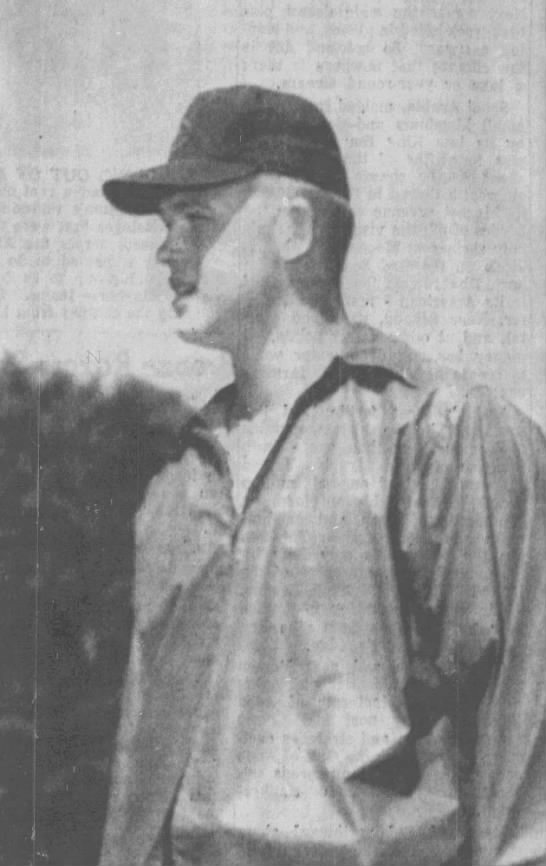
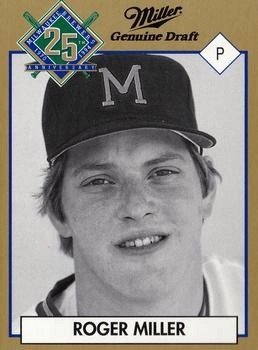
Roger Miller and Darwyn “Buck� Grover were both imposing physical figures whose athletic exploits matched their size.
Miller stood 6-foot-3 and was a 1972 Uniontown graduate who made his mark in baseball and reached the major league level in 1974.
Grover stood 6-foot-4 and was a 1954 Brownsville graduate who excelled in three sports. He went on to play baseball in the Chicago Cubs organization and in football nearly made the Pittsburgh Steelers roster in 1960.
Miller, who died in an industrial accident at the age of 38 in 1993, and Grover, who died at the age of 59 in 1996, are both part of the Fayette County Sports Hall of Fame Class of 2025 in the deceased category.
“Both are very worthy of induction and I’m happy to see they’re getting in,� said Hall of Fame co-founder George Von Benko who discussed both athletes’ attributes.
Miller began drawing attention from major league teams as early as his sophomore baseball season in 1970 at Uniontown. He played for UniontownÄ¢¹½ÊÓƵ American Legion team when he was just 14 years old. As a senior in 1972 he recorded 79 strikeouts in 46 innings with just 20 walks for the Red Raiders.
Uniontown head coach Ross Orndorff said of Miller in a 1993 interview, “I never coached a better pitcher than Roger, or for that matter a better person.�
Tom Holliday, MillerÄ¢¹½ÊÓƵ catcher with the Red Raiders, opined in a 1989 interview, “Miller was the best I ever saw around here. I caught him for three years and he sent me home a few times with a sore hand from his fastball.â€�
“If you look at his numbers, the guy was a dominant pitcher,� Von Benko said. “One of the things that separated him was that he was such a bulldog on the mound. He was a competitor, he did not give an inch. He was just a tremendous pitcher. There aren’t many players from around her that made it to the major leagues.�
Miller was drafted by the Milwaukee Brewers in the 15th round of the major league baseball draft in 1972 at only 17 years old and he began his professional career with the Newark Co-Pilots. He moved up to pitch for Class A Danville in the Midwest League in 1973 and was 8-4 with a 3.32 ERA.
Miller was promoted to the Class AAA Sacramento Solons of the Pacific Coast League in 1974 where he became a PCL all-star with an 11-5 record and a 4.48 ERA in the hitter-friendly league.
The right-hander reliever was called up to the Brewers for two games late in the 1974 season and made his major league debut at Fenway Park against the Boston Red Sox on Sept. 8.
Miller entered the game with two outs in the bottom of the sixth inning and retired Tommy Harper to strand the two inherited runners. In the seventh he retired Hall of Famer Carl Yastrzemski and All-Star shortstop Rico Petrocelli of BostonÄ¢¹½ÊÓƵ potent lineup but hit Bernie Carbo with a pitch and gave up a two-run homer to All-Star right fielder Dwight Evans. He pitched 1 â…“ innings allowing the two runs.
Hall of Famer Juan Marichaul started for the Red Sox that day with former Pirates All-Star Bob Veale appearing in relief for Boston.
Miller made one more appearance, giving up one run in one inning in a game on Sept. 13, also against the Red Sox in Milwaukee, but that would be his last in the major leagues.
Miller eventually returned to Fayette County to live in Mill Run and became one of the great pitchers in the Fay-West Baseball League. He set the league record for consecutive pitching wins with 28 spanning from the 1985 season to 1989.
Miller will be represented by his son Jeremy Miller at FridayÄ¢¹½ÊÓƵ Hall of Fame banquet at Pleasant Valley Golf Club in Connellsville.
“RogerÄ¢¹½ÊÓƵ family was thrilled when they heard that he was going to be inducted,â€� Von Benko said.
Grover made his mark in football, baseball and basketball at Brownsville.
“HeÄ¢¹½ÊÓƵ a legendary figure,â€� Von Benko said. “I knew him as an official later in life but I heard from others about his athletic career. He was highly regarded as an athlete at Brownsville, a tremendous football player who also played baseball and at one point signed a minor league deal with the Cubs and pitched in their organization.â€�
On the football field, in 1953 Grover was voted second team All-County and All-Big Six. A year later he was again named to the All-County second team and to the All-Big Six first team, and also earned UPI third team all-state honors.
Brownsville went 9-1 in 1954 with the only blemish being an early-season loss to Duquesne when Grover was out with a fractured wrist.
During the 1953-54 basketball season, Grover finished second in scoring in Section 5 with 171 points in 10 games for an average of 17.1.
Grover was an outstanding pitcher for Brownsville as well and helped the Brownies end a 12-year dry spell with a section championship in 1953. Brownsville qualified for the WPIAL playoffs but fell to California, 4-2.
Wth Grover leading the way, Brownsville repeated as section champions in 1954 and suffered a heart-breaking 1-0 loss in the first round of the playoffs to Charleroi.
Grover spent four years in the minor leagues where he compiled a 22-26 record. He played in the Cubs organization in 1956 and 1957 and was in the Kansas City Athletics system in 1958. He spent one season in the Detroit Tigers organization in 1963, posting a 3.09 ERA there before ending his professional career.
Grover became a standout pitcher in the Fayette County Baseball League and led Coolspring to two consecutive regular-season and playoff championships at one point.
Grover was recruited by Clemson in football and spent his freshman season with the Tigers but eventually transferred to Salem College. He tried out for the Steelers and was the last cut by head coach Buddy Parker in 1960.
Grove later played for the Pennsylvania Mustangs of the NAFL in 1965, who finished in second place that season.
Former Brownsville football star Steve Garban had high praise for Grover in a past interview.
“Buck Grover may have been the single best athlete I’ve ever seen in my life,� Garban said. “He could do it all. He played football, basketball and baseball and was absolutely outstanding in all of them.�
“To say the least, he was a colorful character,� Von Benko added with a laugh.
After his playing career ended Grover turned to officiating and was a longtime umpire and referee in baseball and football.
“Bob Fee, who officiated with him, is going to represent Buck at the Hall of Fame luncheon,� Von Benko pointed out.
Hall of Fame festivities will be held Friday beginning with the annual golf outing at 8:30 a.m., weather permitting, followed by the luncheon and inductions at Pleasant Valley Golf Club in Connellsville.